

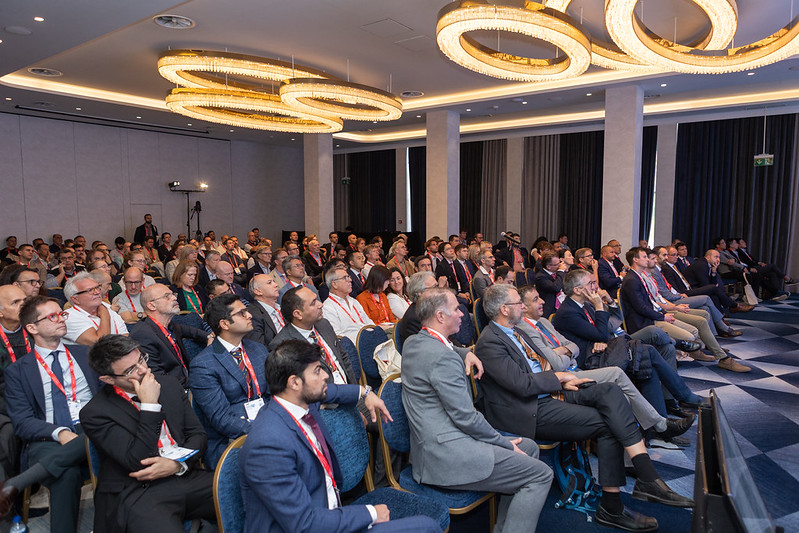
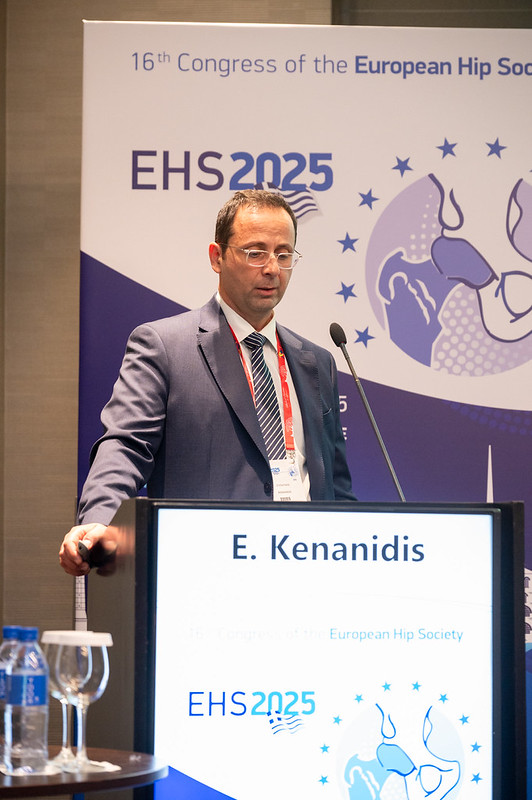
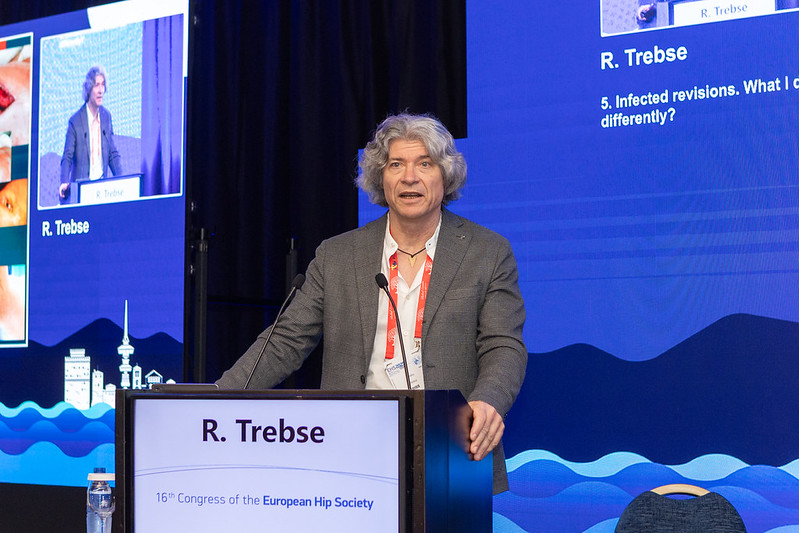
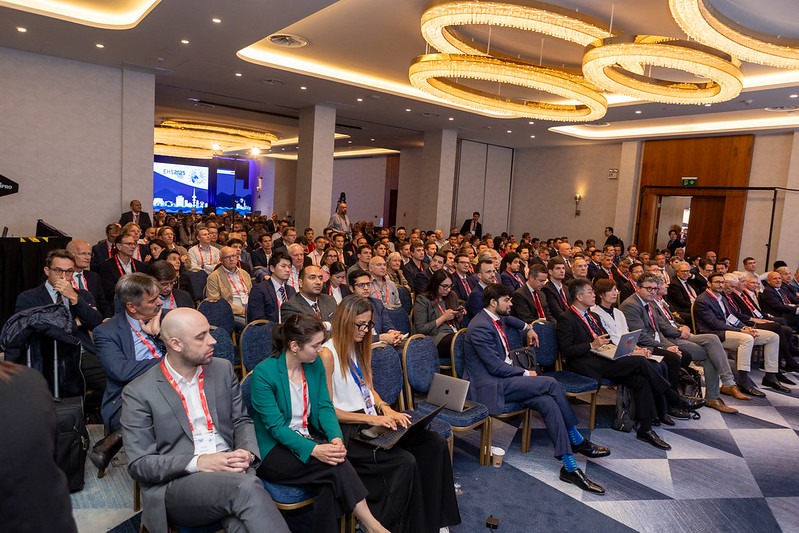
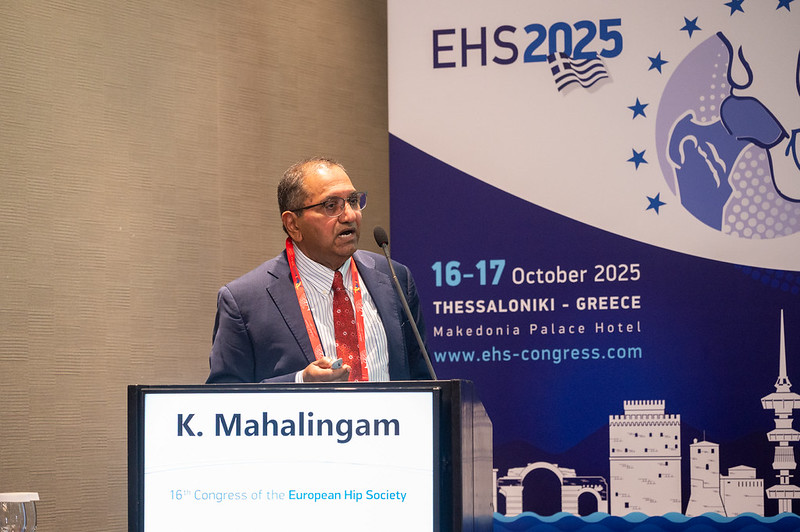
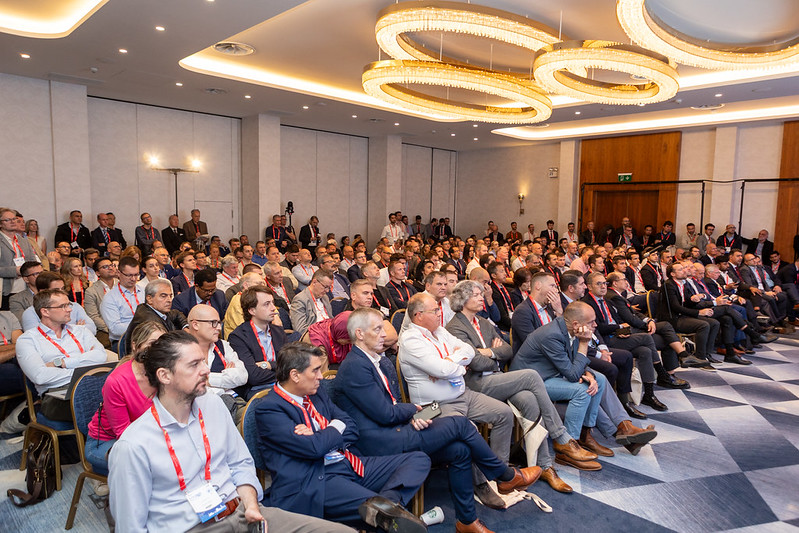
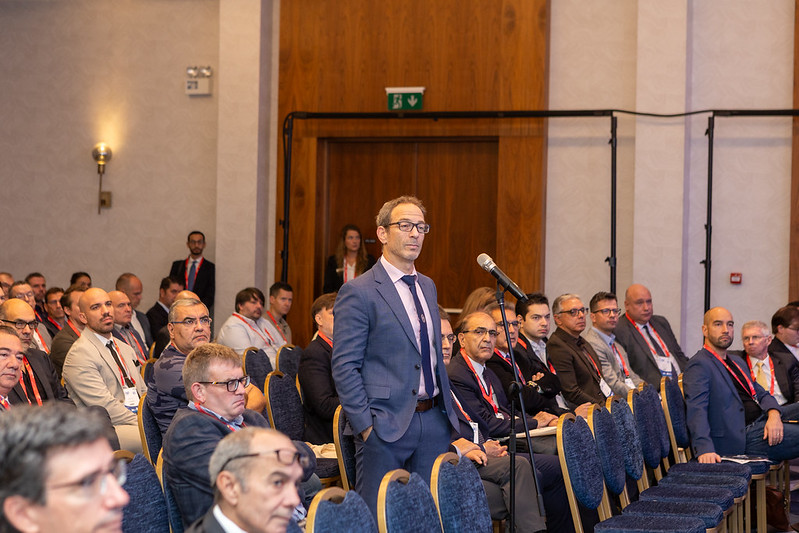
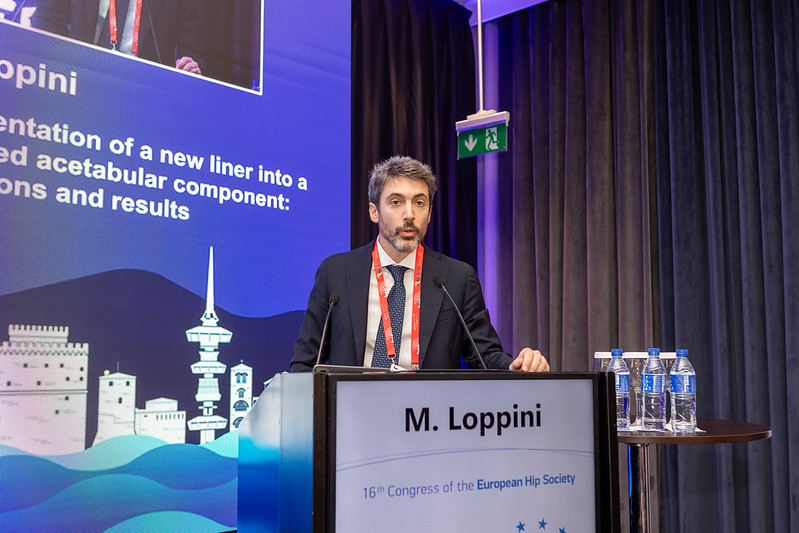
The 16th Congress of the European Hip Society (EHS) took place in Thessaloniki from 15–16 October 2025— an event that gathered a record number of participants in the history of the society: 1,100 delegates from 90 countries. Over two days, participants had the opportunity to choose among 46 scientific sessions covering the most relevant topics of modern hip surgery, ranging from arthroscopy and reconstructive/restorative procedures to the application of additive technologies.
Among the many powerful scientific sessions of the congress, I want to highlight the following in more detail:
Session: ICL COMPLICATIONS: Dealing with Failed Hip Fracture and SYMPOSIUM in Acetabular Revision: Planning, safe removal & reconstruction technical options
Regarding the session Dealing with Failed Hip Fracture. The relevance and significance of this session are related to the fact that total hip arthroplasty in cases of consequences of fractures of the hip joint and the proximal femur often involves certain technical difficulties. The complexity of surgical intervention lies in the presence of deformities and bone defects after previous operations, osteoporotic changes in the acetabulum and proximal femur, large volumes of dense fibrous tissue, significant retraction and degeneration of the periarticular muscles.
This necessitates the development of new approaches to hip arthroplasty. Furthermore, in some patients, it becomes necessary to remove metal implants previously used, that further complicates the arthroplasty. All of this leads to an increased number of complications in this category of patients, with periprosthetic infection ranking among the most common.
The session featured the following scientific presentations:-
Dr Maha Lingam presented the experience of arthroplasty in patients with failed hip fractures with direct anterior approach and demonstrated in his report that the less traumatic anterior access may reduce complications in this challenging patient group.
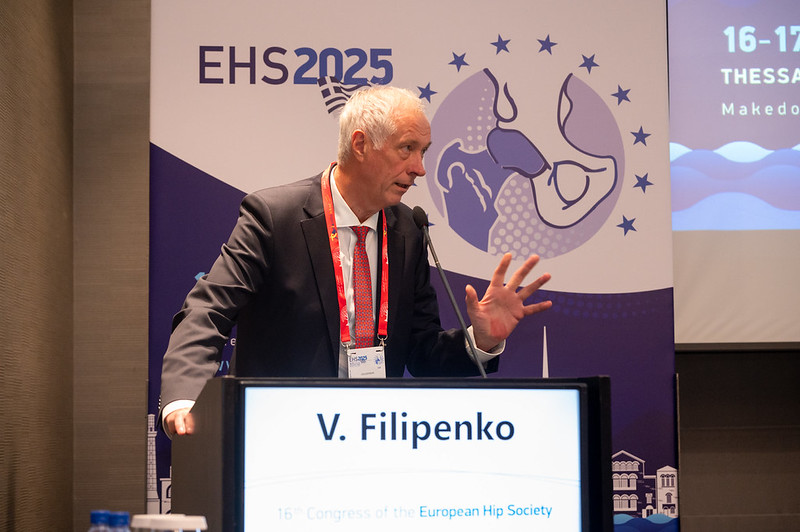
Prof Volodymyr Filipenko devoted his presentation “Modern approach in primary THA after failed treatment of hip fracture” to finding solutions to the following issues:
- Should metal structures be removed simultaneously with THA or only with a break between surgeries?
- Which kinds of femoral stems prescribed in case of fracture of the proximal femur?
- What are the features of choosing of implant cup in case of fracture of the acetabulum?
- How to reduce the risk of infectious complications?
- How to reduce the risk of femoral head dislocations after THA?
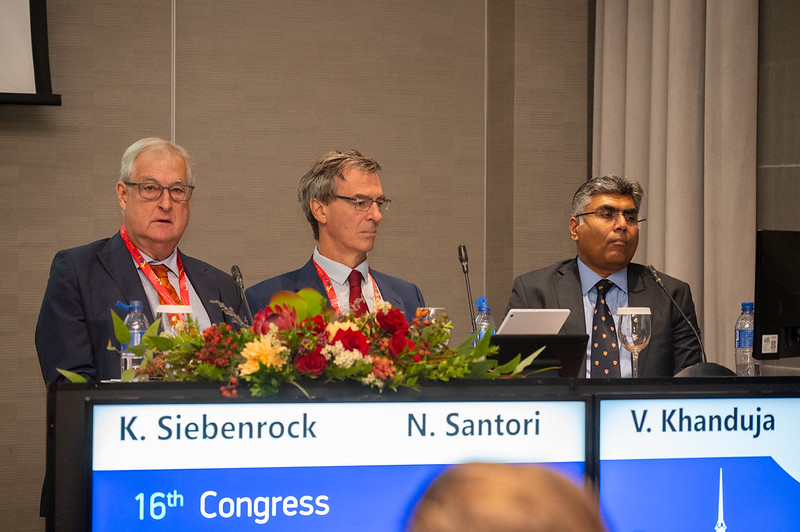
Dr N Santori continued the topic and demonstrated that in cases of failed hip fractures, decisions on the staging of operations should be made individually, taking into account the results of the preoperative examination of patients. Particular attention must be paid to the removal of metal implants from the femur prior to arthroplasty.
Dr J Visser emphasized the importance of restoring the acetabular component in cases of failed acetabular fracture fixation. In cases of anatomical disruption of the acetabulum due to trauma, reconstruction using autografts, plates, press-fit cups or cages with cemented cups may be necessary. In the presence of pelvis discontinuity, cap-cage reconstruction, acetabular distraction technique, and individual custom-made acetabular implants are used.
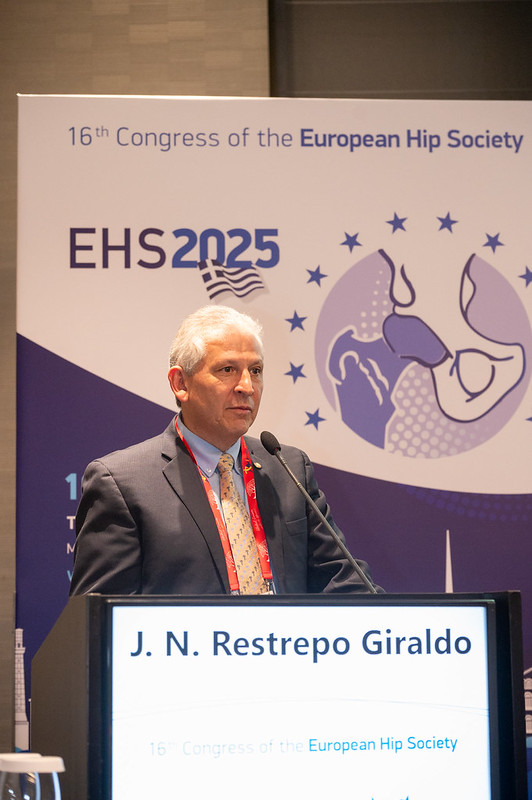
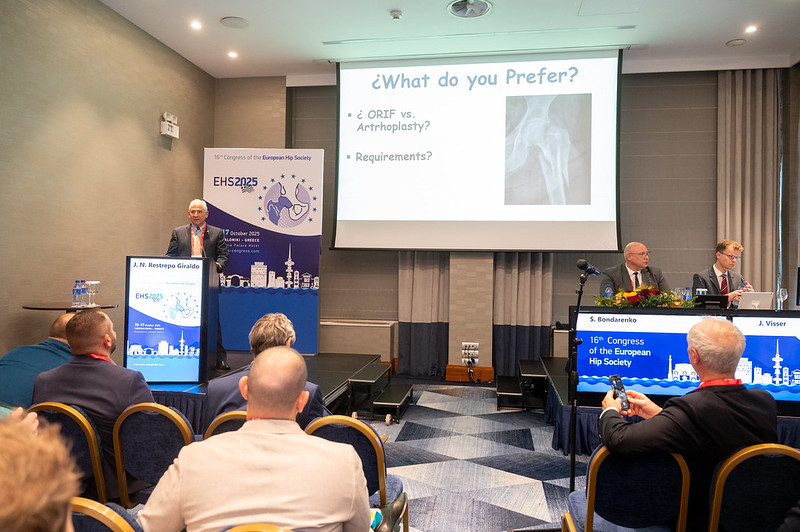
Dr N Restrepo Giraldo, International EHS member from Colombia, presented his experience in Revision of failed cephalomedullary fixation on proximal femoral fractures. He provided examples of using long uncemented stems in intertrochanteric fractures and demonstrated that longer stems reduce stress concentration and the risk of periprosthetic fractures in case of unsuccessful surgical treatment of intertrochanteric fractures. Using dual mobility cups signified the reduction of the risk of instability in arthroplasty after intertrochanteric fractures.
Dr E Kenanidis presented his clinical experience using constrained liner to reduce the risk of dislocation in elderly group of patients.
SYMPOSIUM in Acetabular Revision: Planning, safe removal & reconstruction technical options started the first day of the congress and was highly notable for the variety of approaches to acetabular revision
Speakers emphasized that the success of acetabular revision depends on:
- Adequate surgical exposure
- Knowledge of bone deficiency patterns
- Awareness of implant options
- Bone grafting techniques
- Modular reconstructive techniques
Prof E Garcia-Rey presented a report on bone grafting in acetabular revision surgery: technique and outcome. The impaction bone grafting technique has been used for more than 20 years, showing good long-term results when applied appropriately.
Advantages of Bone Grafting: bioactivity – osteoconductive properties, availability in required quantities, low cost, the possibility of reconstruction of both segmental and cavitary bone defects. The main Disadvantages are: bioactivity – bone remodeling of grafts occurs through partial resorption, its replacement with a partial loss of bone mass, the risk of aseptic loosening of the implants; the necessity for a bone bank and a system for providing and storing allografts.
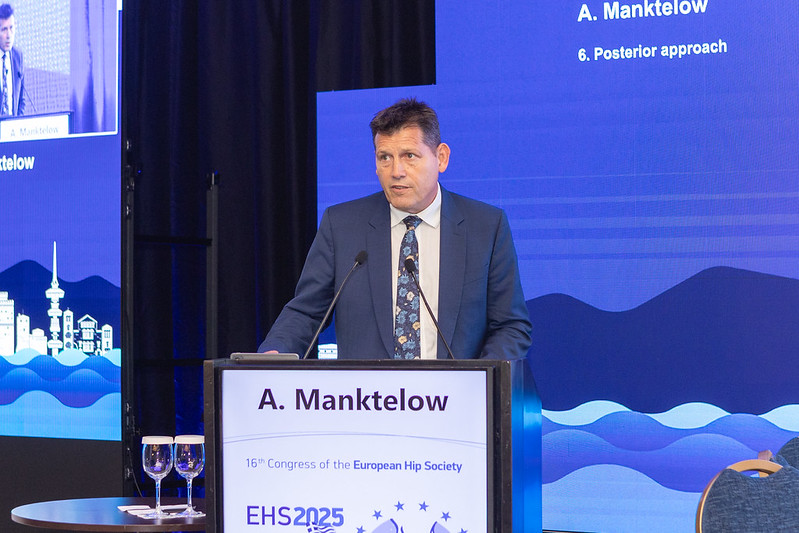
Prof A Manktelow presented experiences of using porous metal augments in acetabular revision surgery at Poprosky type II and type III defects. The main advantages of porous augments: Bioinert: the absence of a negative reaction of human body to these implants; The possibility to obtain a reliable primary fixation to the bone; Ensuring a stable fixation of the acetabular cup; Osteoconductive properties ensuring good osseointegration of the augments to the bone; No bone loss in the reconstructed defects in dynamics; The possibility to join several augments to each other using bone cement to reconstruct large bone defects.
Disadvantages: Bioinert – the lack of bone remodeling; Definite shape, making difficult to reconstruct complex defects; Elevated cost.
Dr D Kendoff spoke about the role of cages or rings in acetabular revision surgery. This method was more relevant in the past due to mechanical fixation and high rates of aseptic instability of aseptic instability in the medium-term follow-up.
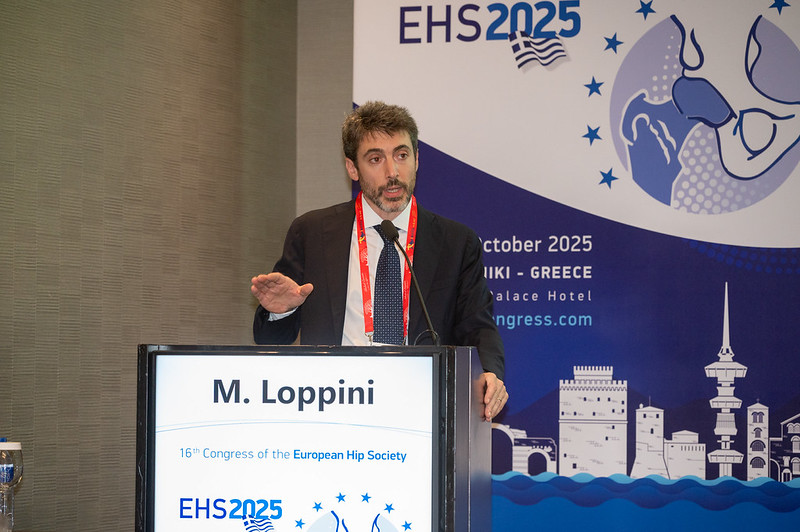
Prof M Loppini shared extensive experience with cementation of a new liner into a well-fixed acetabular component at revision. The advantages of this technique include less traumatic revision surgery, preservation of acetabular bone stock, reduced operative time, and maintaining high functional outcomes after revision surgery.
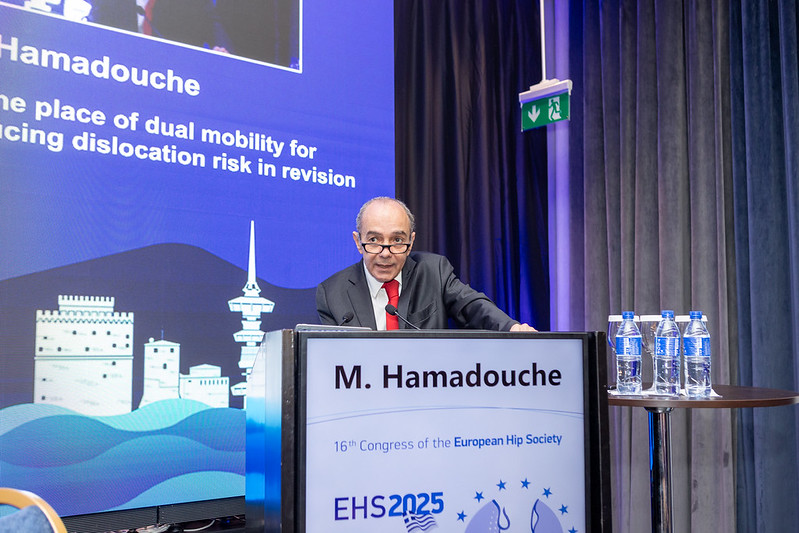
Prof M Hamadouche in his report defined The place of dual mobility for reducing dislocation risk in revision TNA. The use of dual mobility system is currently the gold standard in revision hip arthroplasty. This is especially important in the case of large bone and soft tissue defects in the hip joint area.
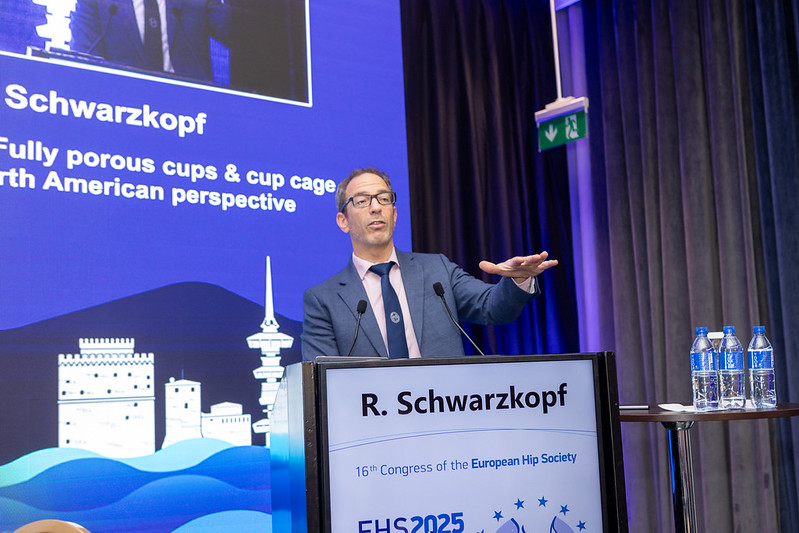
Prof R Schwarzkopf International EHS member from the US presented breakthroughs in the use of robotic technology for total hip arthroplasty. He demonstrated examples showing that robotic systems ensure more accurate positioning of hip implant components, significantly reducing the number of complications.
I want to express deep gratitude to all members of the society for their active participation, the high level of representation, and their contribution to the development of modern orthopaedics.
Stanislav Bondarenko MD, DMSc
Honorary Consul of France
Director of Sytenko Institute
of Spine and Joint Pathology
National Academy of Medical Sciences of Ukraine
Professor School of Medicine of V N Karazin Kharkiv National University
EHS Secretary General
SICOT National Delegate of Ukraine
80 Hryhori Scovoroda St., Kharkiv, 61024 Ukraine
Phone: +380675740151
Email: bondarenke@gmail.com
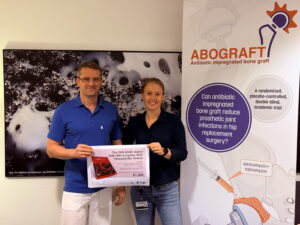
Winners of EHS SAGE 2025 1st Prize
Message from the Winners of the EHS–SAGE 1st Prize Award 2025
Dr Daphne Wezenberg & Prof. Jörg Schilcher, Linköping University, Sweden
It was a great honour for us to receive the Hip International 1st Prize of the EHS–SAGE Award at the 16th EHS Congress in Thessaloniki for our study: “Locally Delivered Vancomycin and Tobramycin Does Not Result in Toxic Serum Levels – A Report from the ABOGRAFT Study.”
We would like to extend our heartfelt thanks to the Scientific Committee of the European Hip Society, the Editors of Hip International, and the Congress organisers for this generous recognition.
As first-time participants at the EHS Congress, we were deeply impressed by the collegial atmosphere, the high scientific standard, and the genuine spirit of collaboration. The support and interest shown in the ABOGRAFT trial—during both the abstract sessions and our consortium meeting—were truly encouraging.
This award marks an exciting moment in our journey. After several years of preparation, we are now ready to expand the ABOGRAFT trial internationally. The engagement we experienced in Thessaloniki has strengthened our belief in the importance of this work and the value of sharing it within the EHS community.
We look forward to continued collaboration and to welcoming more colleagues across Europe into the study.
Warm regards,
Daphne Wezenberg & Jörg Schilcher
Linköping University, Sweden
On behalf of the ABOGRAFT team
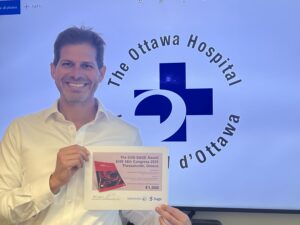
Winner of EHS-SAGE 2025 2nd Prize
Message from the winners of the EHS–SAGE 2nd Prize Award 2025
Dr George Grammatopoulos, Ottawa, Canada
It was a great honour for us to receive the Hip International 2nd Prize of the EHS–SAGE Award at the 16th EHS Congress in Thessaloniki for our study: “The Anterior Approach Does Not Improve Recovery After Hemiarthroplasty for Femoral Neck Fracture. A randomized Controlled Trial.”
We are very grateful to the Scientific Committee of the European Hip Society, the Editors of Hip International, and the Congress organisers for this generous recognition.
The recent EHS Congress at Thessaloniki was a hugely successful meeting as portrayed by the number of participants, the caliber of the international faculty attended, the quality of research presented and the scientific standard throughout.
The recognition of this work focusing on Hip Fracture care, highlights the importance of studying this patient population further to provide evidence-based guidelines on how to improve treatment success. We hope that our study will guide practice and stimulate others to
further the field in the future.
Kind Regards,
George Grammatopoulos
On behalf of the co-authors (Woolnough T, Horton I, Garceau S, Beaule P, Feibel R, Gofton W. Poitras S, Kim P, Grammatopoulos G)